Downstream data

Step it UP!

by Lora Cecere on January 25, 2012 · 0 comments

My mother used to tell me, “If you cannot say anything positive, don’t say anything at all.”  And, while I should  probably heed her advice on this beautiful morning in Baltimore, I am not going to.

This week, I attended the Grocery Manufacturers Association (GMA) supply chain event.  When it comes to content, it was one of the worst events that I have attended in the past two years.  It was very disappointing.  So, why am I not going to heed my mother’s advice?  The answer is simple.  I care too much about the industry.

In the week  prior, I had attended the National Retail Federation (#NRF12) event in New York.  Following the event,  I had written a blog about the growing gap between consumer products and retailers in the adoption and understanding of new technologies. I left the GMA conference muttering, “It is not a gap.  It is a great divide.”

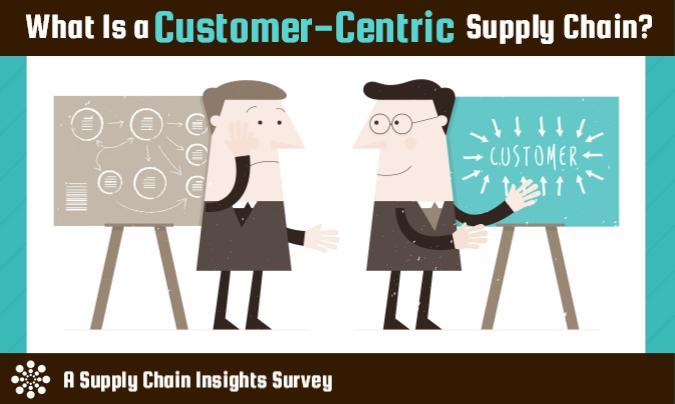
I contrasted what I heard at the conference to what I am hearing from my CPG customers.  The words of one of my customers’ kept ringing in my ears. Her point over and over again to me is that it is about the customer.   Her new goal is the ability to “define the Art of the Possible to better serve the customer.”   What does she mean by that?  It is the redefinition of the supply chain to connect customer’s customer to supplier’s supplier to improve sensing and drive a more intelligent response.  It is the use of new forms of analytics and the convergence of  new technologies (mobile, social and geolocation) to change supply chain management. During the conference, I did not hear the word “customer” once.  I scratched my head, and wondered what happened to the definition of the supply chain from the customer’s customer to the supplier’s supplier.

I had just come from Barcelona Spain where I spoke at a Georgia Tech class on Demand-driven Supply Chains.  As part of the program, I got to judge regional Coca-Cola pilots where distributors competed on who could drive the best progress through demand sensing and shaping initiatives. They were great!

I am also excited about the work that I am seeing in the industry on Digital Point of Purchase.  This is the use of digital technologies to change the shopping experience and the supply chain end-to-end.  I am closely following the work of my friend Jerry Wolfe, CEO and Vice President of Supply Chain Strategy at McCormick, on his work on Digital Point of Purchase (Follow his tweets at #DP2P.  They are excellent.)   So, can you imagine my dismay to see four executives on the main stage  speaking about “collaboration” as a series of small projects to eliminate dead head miles?  This is yesterday’s news.  I wanted to scream!

As the day went on, the program was even worse.  There just was not much there.  Very disappointing.  In the words of Warren Buffet, “When the tide goes out, you can see who is swimming naked. “  Folks, in my opinion the tide is going out.  Supply chain is more than logistics.  The world of technologies is at a revolution not an evolution.  We need to step it up and embrace convergence.  We need to redesign supply chains for big data to be ready for food safety compliance and customer sentiment.  Because if we do not, I fear we will see a lot of people swimming naked. It could be YOU! <And, as I scanned the audience at the event, this would not be a pretty sight.:)>

Seven Topics that I would have liked to have seen on the Agenda:

I know from many years of developing programs, that there are always critics. I don’t want to be a critic of the program without offering suggestions.  So, to be helpful to program planners, I wanted to share some thoughts on some potential themes for next year.  Here are some themes that I would like to have considered:

Mobility.  How are companies adopting mobility, and how is this changing the relationship with the customer, the cycles in the supply chain and the ability to improve communication with employees?  How are companies planning to use RFID and embrace the resurgence of RFID as a better sensor for the supply chain?  How is the adoption of mobility changing the pace of the supply chain?  How is geolocation visibility changing transportation?

Demand Orchestration.  Commodity prices are escalating.  Demand volatility is increasing.  Companies are looking for strategies to bridge volatility across the supply chain market to market.  At the conference, it would have been great to have had a discussion on how companies are managing promotions and new product launch with market-driven value networks.

Store Circulars.  The traditional grocery store cycle has been driven by the weekly printed circular.  Is this going away? What is the adoption of electronic circulars, and how does this change the rhythms and cycles of the supply chain?

Digital Path to Purchase.   I feel that we will only ever really collaborate (establish a long term win/win value proposition) if we focus together (retailer and the manufacturer) on the shopper.  I would have loved a discussion on how digital technologies (social, mobile, geolocation and eCommerce) are changing our relationship with the shopper.  A discussion of lessons learned, pitfalls and successes would have been a great discussion topic.  For example, is 5X lift on electronic coupons the market average?  And, if so, how are companies dealing with the replenishment issues of greater volatility?

User-based Content.  How are companies syndicating consumer generated rating and review data and using it to transform their supply chain?  How are they using it to better sense what customers want and how they are serving the customers?

Demand Sensing.  I would have loved to have seen a great discussion on the changes store clustering strategies along with insights on current state of syndicated data, the evolution of usable point of sale data, the convergence with social sentiment and User-generated Content (UGC), and how this is changing merchandising, store assortment and replenishment strategies.

Future of eCommerce.  What can we learn from Amazon and Alice.com’s current work into grocery retailing?  What does this mean for channel strategies and the assortment at the store?

Food Safety.  Where are we on the many initiatives on food recall and what will the food safety mandates mean to enterprise architectures?

Horizontal Processes.  How are companies defining horizontal processes to align end-to-end.  How are the processes of revenue management, supplier development, assortment, Sales and Operations Planning and social responsibility changing supply chain organizations?

Sustainability Scorecards.  We have talked about sustainability, and we have corporate social responsibility initiatives, but when the rubber hits the road, how is compliance affecting buying?  How is the sustainability scorecard affecting what is bought today and what will be bought in the future?  What steps and progress have we made to have a “greener” consumer value chain?

Summary:

However, as I drink my cup of coffee, I reflect on some undeniable truths.  GMA is primarily a lobbying agent for the consumer manufacturers.  The only people that can affect the program and the focus of GMA are paying members.  Supply chain is only one of the user-based committees.  The fee structure for folks like me to join is prohibitive.  So, the only way that I can affect the program and the course of the industry is to appeal to my friends who are members.  So, here I go.  This is my APPEAL.  Please STEP IT UP!  The tide is going out.  I believe what I saw this week is not good enough….  Let me know how I can help.

What did you think of the GMA conference and what do you think should be the focus of next year’s event?

This week, I will be in Phoenix at the Sales and Operations Planning (S&OP) IE event.  I will be moderating the program on Friday and discussing my current research.  Will I see you there?  Look for my tweets at @lcecere.


Today, I landed in Barcelona. It is one of my favorite cities.  Tomorrow, after I speak to twenty-one CEOs on the concepts of Market-driven Value Networks, I will put on my sneakers and walk to La Sagrada Familia.  For those that have seen this wonderful architecture, you know how moving this famous work by Antoni Gaudi is.  And, you know the story….  The cathedral has been under construction since 1882, and the dates for completion range from 2040-2100.  It may never be completed. <No kidding.>

One of the things that I love about the architecture is the detail.  It is ornate with small ceramics and intricate embellishment. It combines many forms of art and nature.  It was a revolutionary approach to architecture.  It was so different that Gaudi will forever remain a controversial figure in the history of architecture.  It took many years. He died before finishing his work…

 What is a Market-Driven Value Network?

My work is helping the world understand Market-driven Value Networks and the power that lies in the redefinition of supply chain architectures.  For those familiar with my writings you know that Market-driven Value Networks are supply chain networks that sense and shape demand while translating demand requirements from customer’s customer to supplier’s supplier with a near-zero latency. It is still aspirational and depends on the evolution of new technologies and processes.  It builds on my six years of research on becoming demand-driven, but is different in three ways:

  • Market to Market.  In market-driven value networks, the extended supply chain is connected bi-directionally from market to market (Note:  The original demand-driven concepts that I initially wrote about did not sense and shape market to market.) Trade-offs are made through demand orchestration processes that trade-off risks and opportunities in both buy and sell-side markets.  The technologies for demand orchestration are just now entering the market in the form of advanced optimization in combination with natural language processing.
  • New Processes.  The concept depends on the building of strong horizontal processes to translate and orchestrate the demand signal.  (Demand translation is the seamless translation of customer requirements across the organization by role and need  (e.g. the translation of demand requirements across different units of measure, reflections of changing mix and from ship to (market views) to ship from (operations views) in near real-time)).   Today, the demand signal is late (seen in days and weeks), and the signal has a singular context.  It cannot adapt for role-based context across the organization.
  • From the Market Back. Traditional processes were also built with an internal view.  The signals are mapped from the corporation to the market.  In market-driven value networks there is an outside-in focus.  Companies use demand signals to listen, test and learn. It is outside-in.  ( The focus from a fixed response to a learning system is also departure from demand-driven supply chain concepts.)

My Take-Aways

At the event. NRF celebrated its 101st anniversary with 2400 attendees.  Lines were everywhere.  Lunches disappeared before half the group got a meal, and the lines to the ladies room were uncomfortably long.  Navigating the logistics was quite a feat.  But, 101 years of giving to the industry?  Time for this old gal to take a pause.  This is a long time.  Congrats to NRF for their role in driving retailer excellence. The event was a success even though navigating the logistics was not pleasant.

At the event, there were a lot of announcements, but very little “true innovation.”   Much of the floor looked the same.  As in years’ past, JDA sported “booth babes” in matching blue stretch lycra welcoming attendees at the entrance to their booth, Manhattan had theatrics and a magician, WIPRO had a robot, and the IBM booth monopolized the show floor.  <The Shaman is not much on gimmicks, but I was tempted to get my picture snapped with the JDA booth babes. I thought my readers would get a laugh.> My POV:  95% of the show floor was yesterday’s news.  Vendors selling traditional concepts.

Many booths were testimonials to past innovators.  When I stopped on the floor at many vendor stands, I felt like I was largely visiting the graveyard of Innovators Past.   As software has been rolled-up, innovation has stopped, functionality is forgotten and the acquisition promises that loomed large at the time of acquisition largely thrown out the window.  Software vendors have rolled up companies without defining new process capabilities or attaining synergies. It has become very sales driven.  My POV:  The show was a testimonial that the only people that win out of a software acquisition are the original founders of the company that is being acquired. 

The failure of a retailer can be defined as death by a thousand cuts.  The additive effects of shrink, small mistakes in store execution and merchandising slowly define a retailer’s success or failure.  It is about day-to-day and minute-by-minute execution defined at the lowest level of detail.  I feel that the answer lies in the combination of customer sensing (sentiment and insights) combined with store sensing and advanced analytics.  We need to embrace natural language processing to answer the questions that we do not know to ask.  (This includes the use of structured and unstructured data. New data forms and higher frequency and granularity of data.)   Most of the analytics on the show floor were first generation analytics built on established data models based on a pre-defined set of questions.  The standard demo did not embrace this emerging field of analytics to sense conditions that we do not know could be occurring.  While IBM’s Watson was on main stage competing on retail questions, I only saw the power of natural language processing in three places:  Teradata’s Aster Data demo, SAP’s NetBase demonstration and SAS’s sentiment analytics. Unfortunately, the use cases were limited. They only focused on social analytics.  I believe that this is about SO much more than social analytics.  We have new sensor data, we have new forms of video and recognition data, and unstructured data sources at both ends of the supply chain.  My POV:  I believe that natural language processing in combination with new forms of supply chain sensing is the answer to stopping the bleeding on the thousand cuts for a retailer.  It is fundamental to the evolution of Market-Driven Value Networks.  We need to free the data from traditional architectures to answer the questions that we do not know to ask. 

As I had the discussion on new data architectures with one of the leading experts at one of the retailers, she said, “I would show you this new type of analytics, but it is about the customer.  It is not about the supply chain.  Would you be interested in seeing customer analytics? ” Can you imagine my reaction?  How can we have a supply chain that does not care about the customer?  How did we let this happen? I largely believe that Customer Relationship Management (CRM) as it was defined in the 1990s architectures is out-dated.  My POV:  We need to take these customer insights into new forms of retail systems–merchandising, revenue management, assortment planning, and store execution systems– to drive market-driven value networks.  They have been defined too narrowly. (I will write more about this tomorrow.)

The event largely talked about the “front end” of the value network.  The booths competed heavily on customer analytics, social sensing, cross-channel order management and mobility.  The event was conspicuously silent on the role of the supplier in driving the effective response.  There were few technologies to support the building of effective supplier networks, supplier risk sensing, and improving corporate social responsibility. It was also quiet on the issues facing retailers to build true-cross channel back office environments.  Retailers that I spoke to at the sessions have a problem.  The capabilities of e-Commerce channels have outpaced bricks and mortar capabilities for inventory management, supply chain visibility and order promising.  They don’t know how these networks need to change for cross-channel operations. There is a network design issue, a need to redefine inventory systems and logistics execution.   They know that there is a greater role for mobility and geolocation, but they want to know more.  Radio Frequency Identification (RFID  systems) are ready for a resurgence in retail and store sensing is greatly improved.  I think that it is time to use it to redesign the systems of supply. My POVDemand cycles are shortening, and supply cycles are lengthening.  Mobility and the use of sensing technologies offer a solution not just how to sell, but how to redefine the entire supply chain. I don’t think that the answer is stuffing new data into old application architectures.

Retail technology adoption has always been slowed by issues with scalability, data cleanliness, and the sheer volume of data.  This should not be an issue any longer.  So, why are we still talking about old nomenclatures, architectures and processes? New types of data, more data granularity with less latency combined with greater computing power should open up new opportunities.  We should be talking about new processes and applications, but we are notMY POVWhy are we stuffing new data with increased frequency and greater granularity into old application definitions?  Why are we finding the answers to yesterday’s problems? Why are we not defining new processes?” 

Is it a Revolution?  Our La Sagrada Familia?

As I stood on the floor at the National Retailer Foundation’s (NRF) 101st event, it was a good time for reflection.  I think that the work that we are doing on IT architectures is a lot like the building of La Sagrada Familia.  I firmly believe that we are at a tipping point where the work needs to be revolutionary, not evolutionary. I also believe that it will take a LONG time, and the value will come from the combination of  technologies, data types and inputs.  It will be little bits, and many types of technologies, to form a whole. It is about convergence and a new type of architecture.  Many types of technology innovations will contribute to the whole: mobility, geolocation, social and sentiment, RFID and sensing technologies, digital images and pattern recognition, natural language processing, and mobility.

I think that we are making two mistakes.   The first mistake is looking at singular technologies and the second is looking at technologies for technologies sake.  Let me give you some examples.  I feel that the discussion should not be about BIG DATA. Instead, I think that it is about the use of new forms of data to answer new questions. I also feel that it should not be about mobility for the sake of mobility. Instead it is about the use of mobility in combination of other technologies to redefine the cycles and reduce the latency of information.

I do believe in the concepts of Market-driven Retailing.  As we build the new architectures, it will take courage.  Let’s face it.  Today, we really do no have best practices or compelling architectures.  We need to fall forward.  We cannot effectively stuff this new data into outdated architectures. It is about convergence. It will be about process innovation where the small data bits and new types of data allow us to see new opportunities.  As we build this, many of us will be seen as crazy….  However, I firmly believe that it will transform companies and drive new forms of innovation. I think that there are many similarities to La Sagrada Familia.

Tomorrow, I will write more on the specifics.  I will outline the places where retailers should get started and share with you insights from the “cool technologies” that I saw on the show floor; but tonight, I need to get to bed. International travel wears me out, and I have a great glass of red wine on the table.

What do you think?  Do you think that we are at a revolutionary place?  What did you see at the show that you thought was cool?