Where is the Beef? is now a colloquialism. The phrase started as a line in an advertisement in 1984 for Wendy’s hamburgers.

I remember sitting at SAP Insider listening to a compelling speech on digital transformation in the spring of 2017. As I listened, I scratched my head, and asked myself, “What does it mean to have a successful digital transformation?” What does digital mean in this context? And, how do we drive value?”
You know me. I am a geek. Definitions matter. I despise the use of hype-based rhetoric by technologists.
I then set off on a mission to gain more insights. The article I published was, “Are you active in the Digital Transformation Drinking Game?” My conference in 2018, showcased case studies of digital transformation. My favorite was the transformation of manufacturing by Agco, a manufacturer of heavy equipment. This one suprised me. It was brilliant. But, I found few to equal.
“Where’s the beef?” is a catchphrase common in the United States and Canada, introduced as a slogan for the fast food chain Wendy’s in 1984. Since then it has become an all-purpose phrase questioning the substance of an idea, event, or product.[1]
Wikipedia
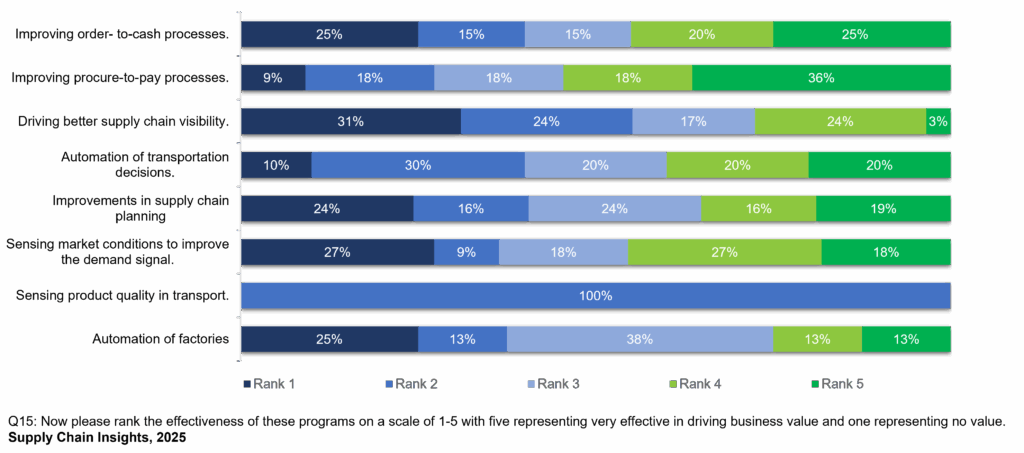
Since then, digital transformation is everywhere but nowhere. Lots of hand waving, and rhetoric. So, in my recent analytics survey, I wanted to find out in greater detail where companies feel that they got value. In short, manufacturers over 5B in annual turnover drove improvement in transactional efficiency in procure-to-pay and order-to-cash eleminating paper processes, but few drove value in supply chain planning or visibility.
Goal
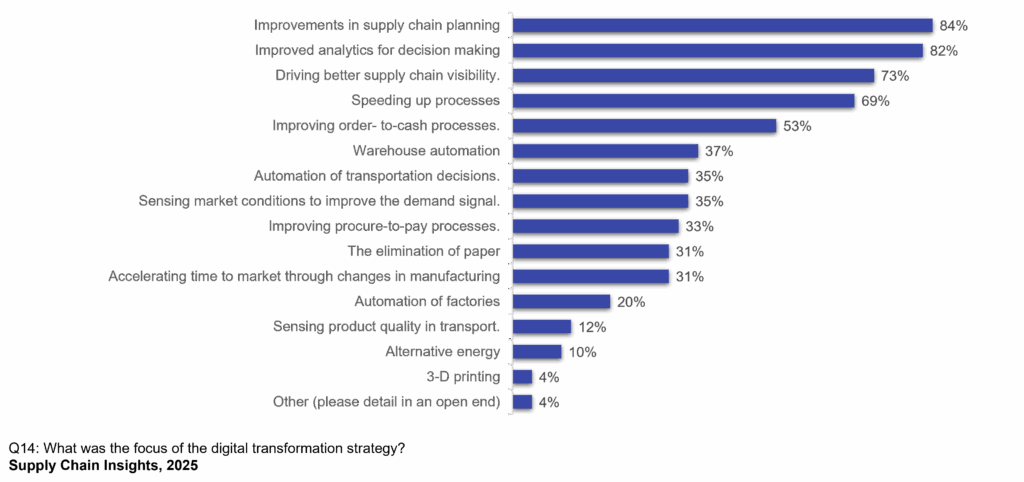
The primary goal of digital transformation was to improve planning and decision making. The announcements by SAP on SAP APO and the movement to SAP IBP, triggered many companies to evaluate alternatives driving an increase in spending in supply chain planning. Within the organization, 55% of the programs were driven by the CIO, and more than 45% of the programs are more than four years old.
The digital transformation model built by Deloitte with ASCM added to the hype. In my opinion, It was just bad. (Feedback shared multiple times with both Deloitte and ASCM.)
Figure 1. Goals of Digital Transformation
The Results
When you look at the results, companies were more successful in improving transactional efficiency than improving planning and supply chain visibility. The redefinition of transportation and the use of transportation streaming data remains an opportunity that few believe is currently driving effectiveness. (The issue is that we have to redefine Transportation Planning to gain true value. This is subject for another blog.)
Figure 2. Self-reported Effectiveness
My Take
The results do not surprise me. During the period, I conducted many qualitative interviews. I found some consistent themes:
- IT Standardization Is a Death Knell for Planning. Sounds good. One throat to choke. A common vendor. However, planning is industry specific, and needs to be driven by business requirements. IT standardization as a mandate for supply chain planning seldom results in an effective deployment. And, deployment by a large consultancy is fraught with a high potential for failure.
- Many Companies Used Digital Transformation as a Foil to Spend More on ERP. With the rise in maintenance costs and the reduction in budgets, many CIOs used digital transformation as an excuse to spend more on unfinished projects.
- Few Companies Understand Supply Chain Planning. As I speak and work with clients, I am surprised at how few companies (this is includes most consulting firms) understand the basics of supply chain planning. The lack of clarity on requirements is the first of many stumbles when the functionality and work requirements are not clear.
- Delivery Methods Lacking. With the rise in spending, the deployment methods of the supply chain planning technologists were not equal to the challenge. Most assumed the client was clear on the requirements. Most were not.
This is my take. I would love to hear from you.