Preamble
Every now and then, a blog troll appears in my feed. What is a blog troll? A blog troll is a person who intentionally posts provocative, inflammatory, misleading, or disruptive comments in online discussions to provoke emotional reactions, start arguments, derail conversations, or attract attention. My troll is André Martin.
He wants me to endorse the concepts of Flowcasting. I cannot. I frequently get emails from him telling me how stupid my approach is. Some of this comes with the territory, but I find that misunderstandings abound in supply chain management. Andre feels that he is right. I cannot endorse the technique.
Let me explain. The concept was developed by André, along with Mike Doherty and Jeff Harrop, in their book Flowcasting the Retail Supply Chain. Flowcasting is a retail supply chain planning methodology that starts with a forecast of consumer demand at the store/SKU level and then mathematically translates that demand into replenishment, distribution, purchasing, and manufacturing requirements across the entire supply chain. Instead of creating separate forecasts for each node (store, DC, supplier, factory), Flowcasting uses a single-demand forecast and calculates the rest.
My issues are many, but my primary issue is that demand is not a continuous flow. Companies consciously disrupt the flow—shifting from pull to push—through demand-shaping programs. Suppliers work with retailers to stimulate demand. This is the goal of the sales account team. The average consumer products company has forty sales account teams. To drive growth, demand-sensing and demand-shaping programs are essential. It is about understanding push and pull against the backdrop of baseline demand.
To all my flowcasting trolls, I would like to share the concept of the challenger demand forecast that I discovered while working with Franklin Sports. As you read it, think about the concept of flow.
I like this case study because it shines a light on the work that needs to be done at the sales account level to challenge a retail forecast, and also highlights the importance of a new technique for a forecast engine — reinforcement learning.
Artificial intelligence comes in many forms — large language models, generative AI, machine learning, unstructured text mining, deep learning, neural networks, reinforcement learning, agents, and agentics. While the industry is wigging out about agentics, I think reinforcement learning is a great step forward in the journey of Artificial Intelligence.
Franklin Sports Case Study
Background
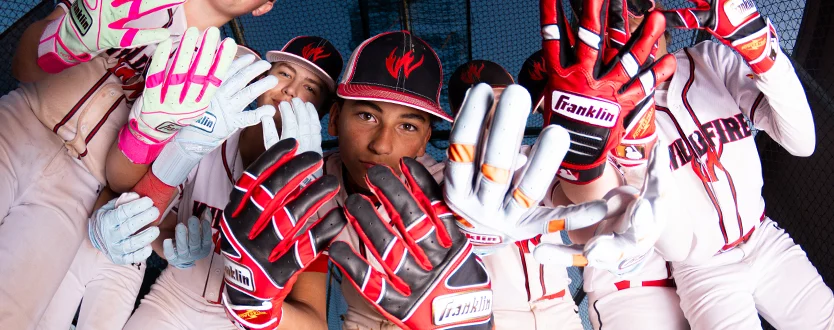
Franklin Sports was founded in Brockton, MA, in 1946 by Irving Franklin and is now based in Stoughton, MA. Using discarded scrap leather from local shoe factories, he developed a line of footballs, boxing gloves, basketballs, baseball gloves, and more to provide athletes of all ages with quality athletic equipment. While much has changed since 1946, Franklin Sports continues to operate with one central belief: Sports Make Life Better.

In 1984, the Company made its indelible mark on the baseball equipment landscape by inventing the Pro Classic, the first-ever baseball batting glove. Designed with the help of Hall of Famer Mike Schmidt, the all-new batting glove quickly became a must-have accessory for hitters across Major League Baseball. To this day, the company continues to innovate and develop new PRT protective equipment and batting-glove technology for our players, as the official batting-glove partner of MLB.
Making sports better requires order reliability, and a focus on customer service. With a primary shipping center in Memphis, a Franklin Sports Asia office, and a network of vendor and retail partners in dozens of foreign countries, Franklin Sports operates a global supply chain that needs to be nimble and responsive. With partnership commitments to the MLB, NFL, NHL, NBA, NCAA, and MLS, time is of the essence for driving an effective response to fluctuating demand.
Meet Scott Kennedy: As Scrappy as The Batting Glove
In our effort to try to document the use of Artificial Intelligence in the supply chain, I asked TrueGradient to introduce us to Scott Kennedy. Scott is the Vice President of Digital Strategy & Analytics at Franklin Sports and one of those rare, holistic leaders who combine deep technical expertise with exceptional people skills. Scott was an early adopter of TrueGradient’s solution.
In our reference call, Scott took me through a no-nonsense approach. He has a burning desire to learn how to improve demand planning workflows using the power of Artificial Intelligence. With a history of helping his business colleagues make better decisions with Power BI, Scott was on a mission to determine how AI techniques could improve insights for his responsive supply chain when he met TrueGradient. (A responsive supply chain needs to operate effectively in a world of changing lifecycles and preferences with a short shipment cycle.)
The Business Challenge
When an NFL team goes to the Super Bowl, fans want that team’s gear in time for the game. The Super Bowl is a hot market. Serving the partnership requirements of our professional league partners is a fast-fashion supply chain.
When Scott first started at Franklin Sports, he built an analytical framework by pulling point-of-sale data and searching for a technology partner to help the company gain insights from channel data. The focus was to use techniques such as reinforcement learning to quickly generate predictive insights in a changing market. As markets shifted, Scott wanted to understand the market drivers and gain insights at the same speed as the market with minimal latency.
The Answer: Reinforcement Learning to Drive Probabilistic Account Forecasting at Scale
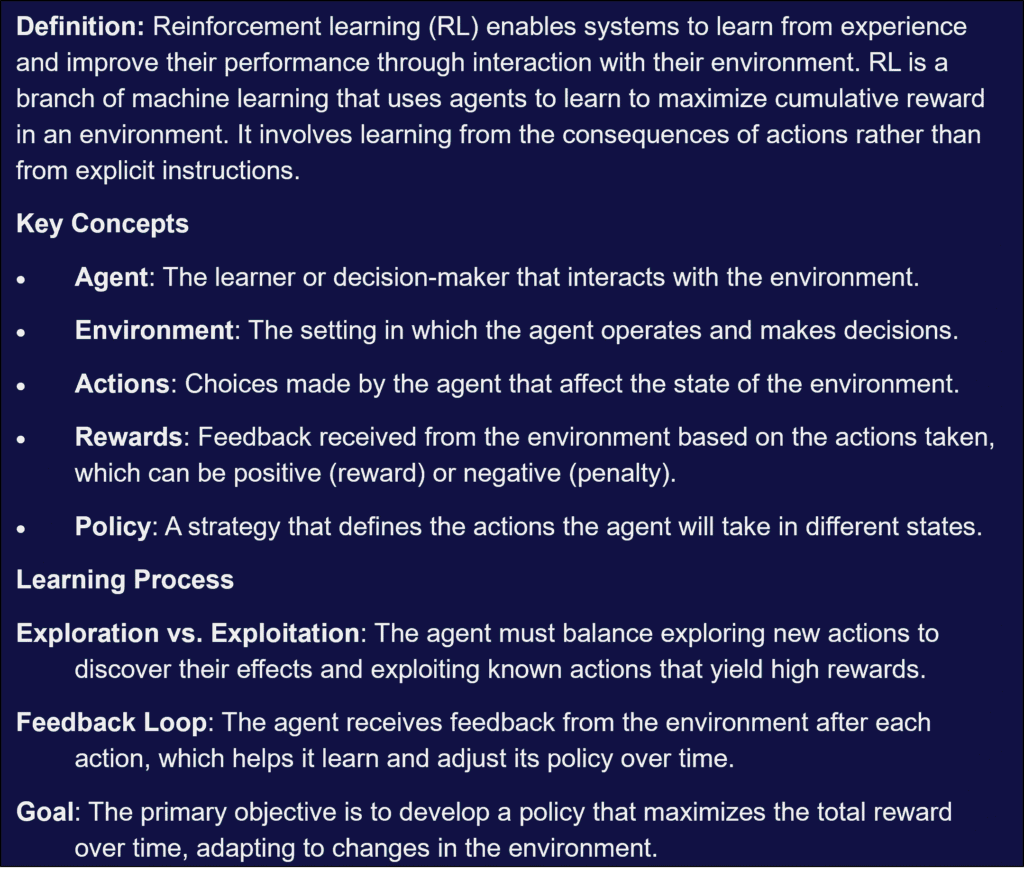
Using Reinforcement Learning, Scott worked with TrueGradient to build Challenger Models to improve his partnership with Amazon. In the challenger model, he uses Amazon’s point-of-sale forecast data to predict their purchase order requirements. The Amazon account team then uses Franklin Sports’ demand models to challenge Amazon’s forecasts with more informed insights. Through better insights from modeling, the sales account team has improved its relationship with Amazon and built a more collaborative relationship by minimizing stockouts.
By design, the company has a group of people more closely aligned with the sales division, who could be brought into conversations and trips to retailers, and a group who sit in operations and are more traditional demand planners. The goal is a responsive supply chain to drive growth. When it comes to talent, Scott’s demand planning team runs the gamut, with a broad range of skill sets, and certain people are more retailer-focused than others.
Within a month, Franklin Sports expanded the challenger model to other retail relationships. The start is building a probabilistic band of what could happen in the future. Then, in conjunction with the sales teams, the demand insights team collaborates with the retail account to align on future orders through probabilistic modeling using reinforcement learning.
Acceptance was easy. Franklin had been working with Amazon’s POS probabilistic models for years, so the concept was already familiar. When TrueGradient built a probabilistic forecast for Scott at the wholesale level, the team was already comfortable with the approach. The probabilistic forecast is used as the direction for what the sales teams want us to drive. For example, if we want to take a deeper position on the Chiefs for the Swifties and look at Taylor Swift’s attendance at a probabilistic level, we can run different scenarios to drive alignment, then consume a plan based on what we are seeing in the point-of-sale data.
Scott said, “Retailers are starting to provide automated procurement plans, but we are still having a gap with out-of-stocks. The use of reinforcement learning and the development of a predictive purchase order plan help us prevent out-of-stocks, drive growth, and improve customer relationships. Working with TrueGradient made this easier because of the founders’ experience in point-of-sale modeling. They were always there for me; I never got kicked down the organization to work with a junior analyst.”
The Approach
Working hand in hand with TrueGradient, Scott built the Amazon challenger model in a week. We are evolving, learning as we go. Retailer fulfillment is improving in line with our probabilistic forecast/plan. It is more of a tool that helps companies understand the future in a supply chain model. Working with a smaller technology partner provides agility to move quickly. It may sound daunting, but the flexibility of an innovator collaborating with a small technology firm drives innovation quickly.
In discussions with TrueGradient, I found that Scott is an early adopter. Franklin Sports is an innovator, having been among the very first customers to test the Reinforcement Learning Agent and Customer Success Agent. The partnership has been invaluable in shaping the TrueGradient platform.
Wrap-up
Scott found TrueGradient through LinkedIn. The TrueGradient founders, with a deep understanding of demand and inventory analysis from their time with Antuit, moved quickly to seize the opportunity to test their solution with an innovator. The TrueGradient, a no-code model, is priced at 80% of the cost of a conventional demand management deployment, and the company is eager to gain market traction.
The Franklin Sports’ goal is to drive reliable growth in a fast-fashion market. The tech is an enabler to the goal. Even though less than 7% of the market is full of early adopters like Scott, he is a business leader who is not afraid to test and learn. Even though he sits in an analytics role, his focus is not tech for tech’s sake. His focus and zeal are on winning with customers. You can hear the drive to win in his voice.
As a multigenerational, family-owned business, Franklin Sports moved from concept to production at the speed of the business. As a result, this is a good case study of an innovator working with another innovator to use AI techniques to improve demand-planning engines.
About Franklin Sports. Founded by Irving Franklin in 1946, Franklin Sports is a Stoughton, Massachusetts-based sporting goods brand that manufactures and sells over 10,000 products across many different categories. Franklin Sports is proud of its partnerships with Major League Baseball, Major League Soccer, National Basketball Association, National Football League, National Hockey League, Major League Volleyball, USA Pickleball, Franklin US Open Pickleball Championships, Women’s National Basketball Association, National Women’s Soccer League, Hasbro, and many others. Franklin is a multigenerational, family-owned business with a rich history and a trusted reputation as a quality sporting goods brand – from recreational sports to the professional level. At Franklin Sports, the team believes that sports make life better. For more information on Franklin Sports, please visit www.franklinsports.com or follow Franklin on Instagram @franklinsports, @franklinsportseqp, and @franklinpickleball, Facebook, and X @franklinsports.
About TrueGradient. TrueGradient is the AI-native Planning OS for modern consumer brands and retailers, replacing spreadsheets and fragmented tools across demand, inventory, pricing, assortment, personalization, and capacity planning. The platform empowers businesses to boost service levels while minimizing costs. Built by operators with real-world experience from Amazon, Walmart, Mondelēz, and IBM, they are bringing enterprise-grade AI to the mid-market and serving a growing customer base across North America, Europe, Australia, and India.
Launch of Dynamic Benchmarking
So, in closing, I want to share some big news.
I have worked for fifteen years on the Supply Chains to Admire methodology. The benchmarking is independent and trusted: it is not a beauty contest of underperformers. The 2026 report will be published on June 23rd. The report takes three months to build. We have done this for fourteen years. It is my annual gift to the supply chain community.
In 2024, the methodology was validated through two years of work with a Georgia Tech IYSE team led by Dave Goldsman. This month, I am proud to share the methodology with #supplychainleaders everywhere by launching the Dynamic Benchmarking solution through my LLM Ask Lora.
What is Dynamic Benchmarking? Wael ABDELMALEK and the Uthereal team have built agentics on top of my LLM, drawing on my decade of research, to help you understand the gap between your current state and that of a Supply Chains to Admire Award Winner in 8-10 minutes. Start by answering 20 questions and receive a detailed plan of action that adapts to the market. Financial and maturity benchmarking for all based on Y-Chart data. Over time, the model learns to give greater insights.
Watch for the announcement, and join the launch podcasts. Then get your own orbit charts, and build your own river of demand to help your team gain insights into possibilities, while benchmarking to top performers defined by the Supply Chains to Admire. For kicks, grins, and giggles, you can also compare your performance to the Gartner Top 25 Performers. 🙂 Gotta love it!
As we wrap up two rounds of testing, I give thanks to the people in my network who have made this possible. The testers are currently going through their second wave of testing before release. I give thanks to Alex Pradhan, Bram Dresmet, Christine Barnhart, Christian Kroschl (and the E&Y team), Dave Winstone, Laura Koxholt, Lukasz Zieba, Margo Cohen, Mathew Spooner, Nicole Miara, and Peter Bolstorff for their help and for giving us the gift of time through the testing process. I don’t think that I could have had a deeper and more diverse group to push us over the finish line. #proud, #thankful
Thank-you Scott for hosting us on your Supply Chain Now podcast.