Last week, I wrote about the evolution of supply chain planning. In my blog post, I commented on HOW little supply chain planning has changed in its twenty-year evolution. As I worked with clients this week, I had a long and hard talk with myself. I am part of the problem. I, like other analysts, are stuck in the traditional software APS paradigm.
In this post, I want to pay homage to trailblazers. This post is a commentary to companies that are challenging the traditional Advanced Planning System (APS) paradigms and trying to forge a new path. As a start-up, I understand how hard it is to pave a new road forward. Here I share insights on four enterprise solutions. (Next week, I will focus on the new forms of business networks that are evolving.)
1) Kinaxis. The Kinaxis solution is probably one of the most misunderstood supply chain planning platforms. With its origins in “fast MRP”, the company has gone through multiple name changes to establish an identity and gain market traction. It is a flexible, in-memory model and platform that enables visibility, demand and supply balancing, what-if analysis, allocation and available-to-promise (ATP) functionality. Throwing APS tradition to the wind, Kinaxis branded under the term “rapid response” five years ago and has recently been pushing the promise of the Supply Chain Control Tower.
In leaving the Kinaxis user meeting this week, I am struck by three things. First, their recent work on mobility and defining the user experience on a mobile application is very cool. Secondly, the flexibility of the Kinaxis solution makes the product hard to message, but the clients that have figured it out, are very happy. (Some of the happiest….) And, third, the solution is most often deployed in material-intensive supply chains for what-if simulation and visibility. It is a cloud-based solution that scales easily for hundreds of users. It has helped many clients that were too constrained by the inflexibility of the traditional APS platform.
At the conference, Kinexions, I heard many clients speaking freely about the deployment of Kinaxis and the turning off of Oracle and SAP APS solutions. Many were almost giddy. The ease-of-use of the Kinaxis system was freeing for their teams.
2) Logility. I like the work that Logility has done in the redefinition of demand planning. Their work on New Product Profiler (a product to forecast a new product) and on attribute-based planning termed Proportional Profile Planning is very encouraging. It should be considered by all Logility customers struggling with demand accuracy in new product launch and promotion management.
3) Solvoyo. This week, I also spent time in Istanbul discussing the evolution of concurrent planning with some of the best minds in supply chain operations research. Many of you may recall the great work that Koray Dugan and Omer Bakkalbasi did at i2 Technologies. They are now teamed together working on the development of concurrent planning.
Essentially, the team is removing the partitions between network design, sales and operations planning (S&OP), inventory optimization, fulfillment and transportation planning. Originally, supply chain planning had to be compartmentalized to enable optimization solvers to run within a feasible timeframe. However, with the advent of cloud computing and more advanced optimization techniques, the team at Solvoyo is using parallel processing in the cloud at Amazon to provide decisions on demand (Software as Service that delivers the output and decisions integrating with the client’s existing software). As a result, the solution is solving inventory, transportation, and fulfillment in one model across strategic, tactical, operational, and executional horizons. Is this important? Yes for three reasons…. The depth of the solution, a more scalable solution, and the bringing of the decisions on demand helps companies that are struggling to get and retain talent.
Inventory problems solved in isolation have had little adoption. Inventory needs to be part of a deeper, more connected solution. The Solvoyo technologies allow users to evaluate the form and function of inventory in network design and connect it to fulfillment and transportation planning. For an old gal in supply chain planning, I love seeing a new definition of supply chain planning.
4) Terra Technology. Terra Technology has dubbed its solution demand sensing and with twenty consumer goods companies using the solution, the company is attempting to gain new clients in distribution-centric industries that are not consumer goods (e.g. distribution, chemical processing. food manufacturing and apparel). The solution replaces rules-based forecast consumption improving the translation of demand from a tactical forecast to a more useable and accurate demand signal for fulfillment. Companies using the Terra solution are averaging a 10% reduction in inventory on the balance sheet and an improvement in customer service fulfillment. However, despite seven years of product marketing, the company is still not well understood by prospects requiring ongoing dialogues with the buyers.
While the replacement of rules-based demand consumption, may seem like a small thing, the impact is significant, and the math has not been matched by the several want-a-be competitors that have tried….
Each of these companies have attempted to blaze a new trail in their own way. They are fighting bigger competitors that have done less platform innovation that charge much more for their solutions, but are more aggressive in marketing. Additionally, the higher costs of the extended ERP solutions makes them much more desirable for large system integrators to implement and recommend.
As I sit in seat 16C on a packed plane winging my way to Minneapolis, I just wanted to raise my glass and applaud the innovators. Hopefully, you will check them out too….
Next week, I will be in New York on Monday and at the Consumer Goods Technology (CGT) conference. I hope to see you in my travels….
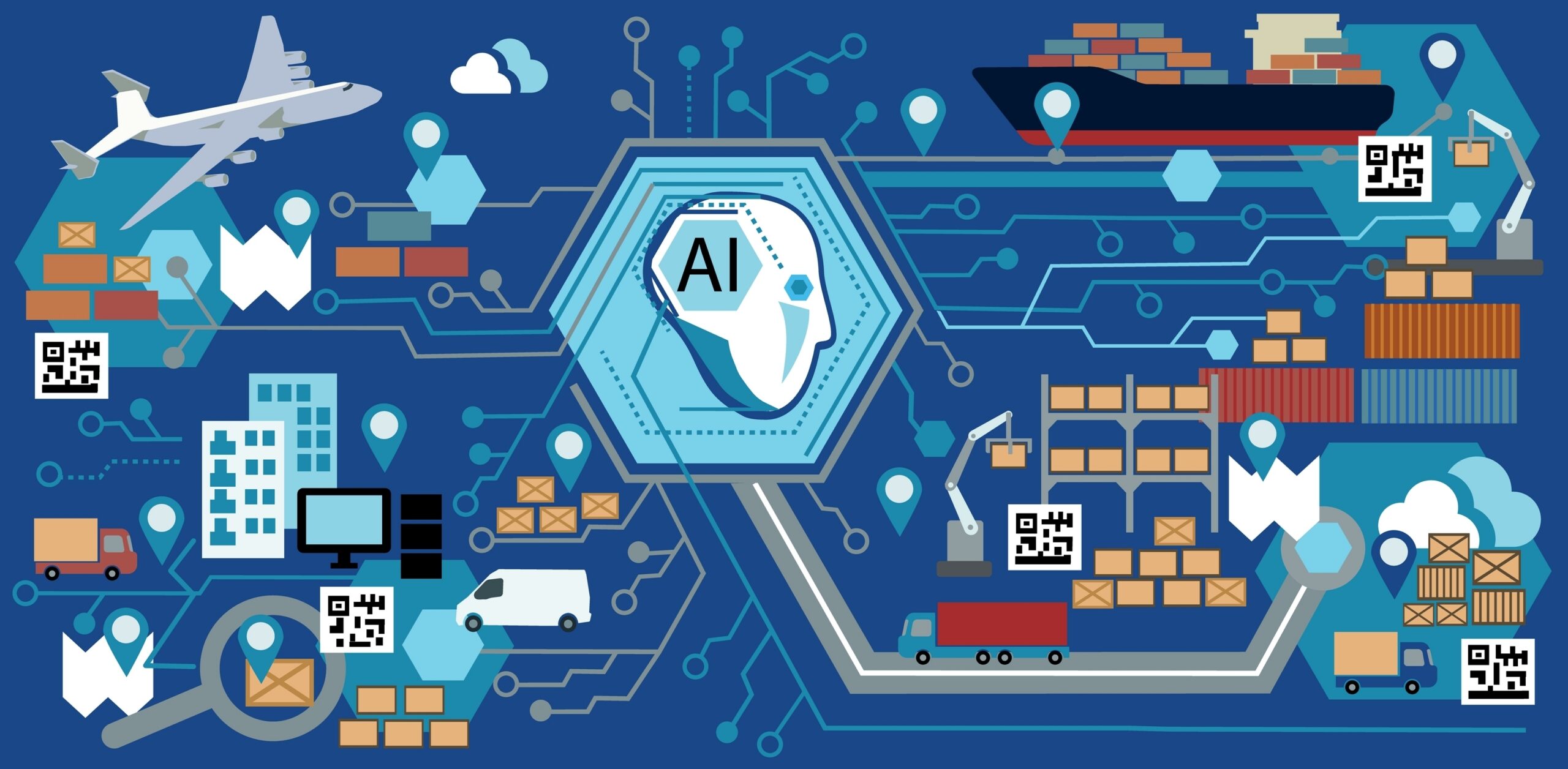
Is your Supply Chain AI Ready?
A simple quiz to assess an organization’s AI readiness.
The pace of change is fast and furious. Every day, technology advances faster than we can digest. A great challenge to have.
Determining whether a supply chain is “AI-ready” is less about technology and more about the gray matter between the ears of supply chain leaders. Leadership, alignment, and clarity of goals matter.
Too few companies are clear on the definition of supply chain excellence. Measuring and rewarding functional metrics reduces the firm’s value. Putting agentics on top of today’s processes can make bad practices run faster, reducing value.
The toughest job for the supply chain leader is challenging existing supply chain paradigms that were defined by the limitations of decades of supply chain technologies. As the curtain lifts on the potential of new forms of technology, process redefinition is our opportunity, but only if we are clear on what drives value. (Here, I link to the Supply Chains to Admire reports to help you define value. The next report will be published on June 23rd, along with my Dynamic Benchmarking Product, to help you define value in the face of your AI readiness. More information about the launch is at the bottom of this blog.)