 Irony: the use of words to convey a meaning that is the opposite of its literal meaning.
Dictionary.com
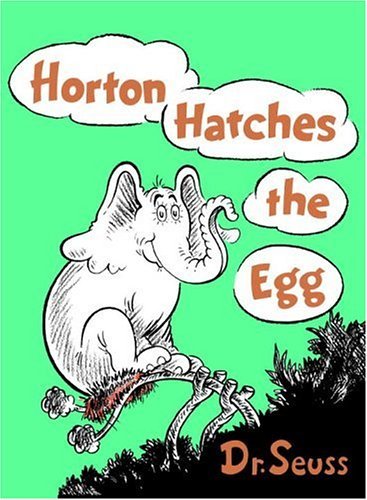
Do you remember Horton, the good-natured African elephant, in Horton Hatches the Egg? Mayzie, an irresponsible bird, asked Horton to sit on her egg while she took a short “break.” To make a long story short: Mayzie permanently relocates to Palm Beach leaving Horton, the elephant, sitting in a tree attempting to hatch an egg.
Naturally, the absurd sight of an elephant sitting atop a tree makes quite a stir in the community. As Horton braves the elements, he is laughed at by his jungle friends, captured by hunters, forced to endure a terrible sea voyage, and is finally placed in a traveling circus. However, despite his hardships and Mayzie’s clear intent not to return, Horton perseveres. He refuses to leave the nest insisting that he keep his word. He often repeats, “I meant what I said, and I said what I meant. An elephant’s faithful, one hundred per cent!”
As luck would have it, the traveling circus ends up visiting near Mayzie’s new Palm Beach home. Mayzie visits the circus just as the egg is hatching and demands that Horton return it, without offering him a reward. However, when the egg hatches, the creature that emerges is an “elephant-bird,” a cross between Horton and Mayzie, and Horton and the baby are returned happily to the jungle, rewarding Horton for his persistence, while Mayzie is punished for her laziness by ending up with nothing.
Ironies
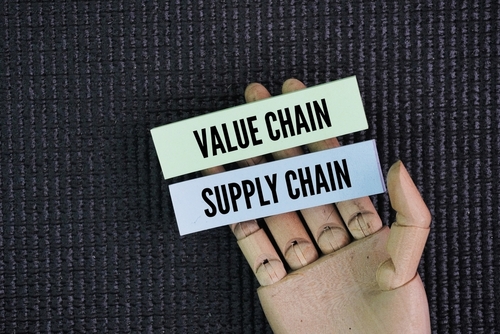
So, a reader might ask, “Why a treatise from Lora on Horton on this week before the holidays?” I like stories. To me it is a metaphor for what I see today. For many companies the supply chain is a function; but the supply chain leader is also asked to be the owner of value chains. They attempt to nurture and design the value chain to deliver the greatest value. However, due to the many functional organizational agendas, the supply chain leader is often left sitting alone on the branch attempting to drive value for the greatest good. The point of my story? We have to persevere.
As I sit at my kitchen table as an entrepreneur, working with many of my clients’ supply chains at the end of the year, I am struck by a number of supply chain ironies. These are the ones that I see today:
- Cash Can Travel Faster Today, but Payment Is Slower. I can now transfer funds in hours, but the average Days of Payables for a manufacturer has increased 30 days over the last decade. (It varies by company, but has increased by 28 for Procter & Gamble, 53 days for Nestle, and 64 days for Bristol Myers Squibb.) Only a few companies have partnered with their suppliers to move money more quickly. This includes BASF that has reduced the number of days by 20 and Coca-Cola that has reduced the number of days by ten. Most companies are pushing costs and waste backwards in their supply chain. Unfortunately, the transactional nature of companies to focus on short-term transactional benefits, blinds their ability to see the impact on their suppliers. Many companies will have to start seeing suppliers fail before they wake up.
- Large Companies Can Scale, but Not Start Up. Small Companies can Start Up, but Not Scale. Large Companies Could Lend a Hand, but They Don’t. Large companies are power brokers in the supply chain. They usually have a lower cost of capital. Many could fund their supply chains more cheaply than their suppliers going to the bank to get commercial terms. Yet, the buyer and seller arrangement for a small software company trying to do co-development with a large company is very one-sided. I watch large company after large company KILL the promise of innovation. In my opinion, co-development partnerships need to be defined as much more than a buyer and seller transaction.
- Customer Service Is Everywhere, but NOWHERE. During this holiday season, as I sit on the phone waiting for a “customer service agent,” I think that supply chain leaders everywhere should rethink customer service. As seen by the growth of Zappos and Audi, it matters. As I wrangle my way through the maze of auto-response systems and Indian-based Business Process Outsourced Services, I wonder who ever leaves these calls thinking that they are defined to give the customer service.
- Companies Say Customer First, But Can They Listen? As I work with clients on their 2014 agendas, many espouse a customer-centric supply chain, but they are hesitant to build listening capabilities. While marketing and sales are traditionally about yelling the message, a customer-centric supply chain starts with the customer and judges the supply chain by its ability to serve. And, how can we serve the customer if we cannot listen? I am amazed how slowly supply chain teams are adopting sentiment analysis for unstructured text mining to listen to the true voice of the customer. When companies can listen directly through the mining of unstructured data, they can hear quality issues… and five times faster.
- Technologies Should Improve the Experience. What About a Real Person? Last week, I paid my mortgage. The check was a manual check written for $2500.00, but it was read as $25.00 through the automated reader. If I was not watching my online banking, I would have ended up with late charge and a ding against my credit. Sometimes, I think that we get so caught up in the mechanics of technology automation that we forget we are real people doing real business with real people.
Dealing with Mayzie
So, if the Supply Chain Leader is Horton in this story, who is Mayzie? In my opinion, Mayzie is the group that is focused on short-term benefit. It is the team or function that wants to work opportunistically to drive short-term gain for the firm while negating the longer-term value that can be driven through a value chain. Like Horton in the book, many supply chain leaders are left defending the original promise of improving value. So, as you sit on that branch questioning what is happening, remember Horton when he said, “I meant what I said, and I said what I meant. An elephant’s faithful, one hundred per cent!” The supply chain leader must buck current trends and stay true to the original mission of driving value.
These are the ironies that I see. Did I miss any? Let me know. And, hopefully, you are not caught in a snafu of your own where your check is misread, the call is placed on hold and the automated “customer service” technology cannot understand your accent.