
Tremors. Seismic shifts. Supply chain management technology has a fault line. It is growing.
The technology market for supply chain management is dramatically shifting. Last week I bounced from call to call. Innovative startups. Artificial Intelligence innovators. Blockchain ventures attempting to define business processes and new approaches. In parallel, I am also seeing market consolidation of traditional applications. There are five fundamental shifts:
- Redefinition of Decision Support Software. Last week, I spoke to three emerging cognitive computing companies attempting to redefine decision support technologies. There is a lot of noise in this market. Decision support includes all forms of planning: demand, supply, revenue, manufacturing and transportation planning. The inclusion of cognitive computing in decision support will make the traditional applications in the advanced planning solution markets obsolete
- Disintermediation of Business Process Outsourcing (BPO)/3PLs. Companies have focused on labor outsourcing and third-party solutions to reduce headcount. The result? The shifting of costs and the loss of control of process integrity. This transfer of ownership reduced the effectiveness of procurement. Blockchain and cryptocurrency can and should disintermediate business process outsourcing. BPO/3PL providers need to be eliminated through machine learning and automation.
- Robust Market Emerging for Digital Manufacturing Technologies. Robotics/wearables/the Internet of Things/additive manufacturing coalescence is redefining manufacturing. This includes the definition of spare part requirements, maintenance outages, and production planning.
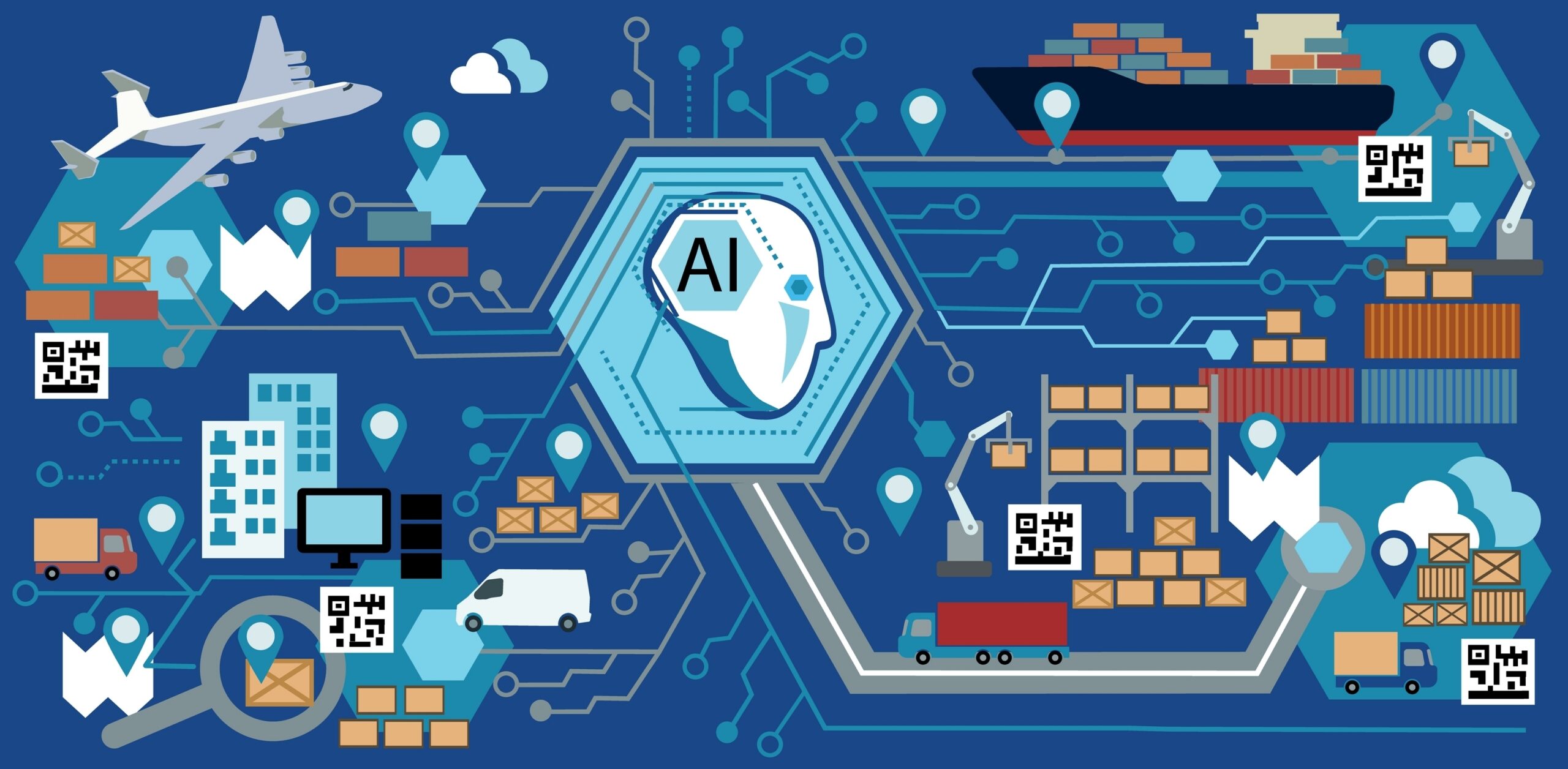
- The Autonomous Supply Chain for Physical Logistics. Drones in warehouses using machine learning for real-time inventory and self-driving vehicles are transforming logistics. It is happening.
- Driving Value in B2B. For the last two decades, we have been trying to squeeze transactional pennies from B2B processes through hands-free processing and automation. We now have the opportunity to use blockchain to improve cold chain effectiveness, improve lineage/track-and-trace to ensure brand integrity, and redefine multiparty finance. The days of factoring, deductions, and bifurcated payments could end. Leaders can now start to think about how to drive true value with suppliers versus the legacy discussions of increasing waste by elongating payables, increasing fines/penalties, and the use of third-party outsourcing that increases issues with payables.
These changes can only happen if we learn from the past, to unlearn, and to rethink the future. The challenge is “unlearning.” Companies are hamstrung by legacy functional thinking.
There are some early lessons. Here is what I hear on calls:
- Having the digital innovation team in the IT organization is like drilling a hole in bedrock. It just does not work.
- System integrators/consultants building software is also not a sustainable/viable model. Adoption of these new ways of working requires testing and learning by small scrappy teams chartered to solve new business models.
- Innovation will never come from application consolidation.
- Fire the narcissistic supply chain leaders that believe that they have the answers. We don’t have the answers. We have historical practices, not best practices. Stalled progress on metrics: 90% of companies find themselves stuck on key supply chain metrics (cost, inventory, growth, ROIC).
New solutions are bouncing around the market. Innovators are looking for buyers. They are seeking business innovators. IT loyalty to Enterprise Resource Planning (ERP) providers, legacy consulting relationships, and fear of change by business leaders slows adoption. Consultants are playing catch-up. Innovation challenges their traditional business models and each company is struggling with their own demons.
We are seeing innovation at the edge. The question is how to move it to the core. We need to challenge the fundamentals of the past and redefine the atoms and electrons of the processes of the future. Doing this requires leadership. It cannot happen at the functional level.
If you are in the United States have a great Thanksgiving.