Recently, I wrote the blog, The Myth of End-to-End Planning, which was read by 27,000 readers. (Thanks for the read, and the dialogue in the comments.)
This morning I sighed at the announcement of a planning event in Shanghai on LinkedIn by a supply chain planning leader touting their solution as the answer for end-to-end planning. This is the same vendor that did an 180 on building outside-in capabilities and is now firmly entrenched in perpetuating traditional thinking. My email has also been full of complaints from employees from various planning technologies, pushing back, “How could I say that their solutions were not effective end-to-end?”
So, you might say, is this worth the trip, Lora?
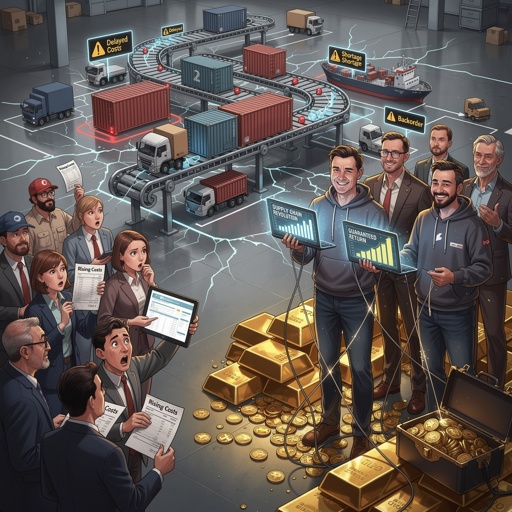
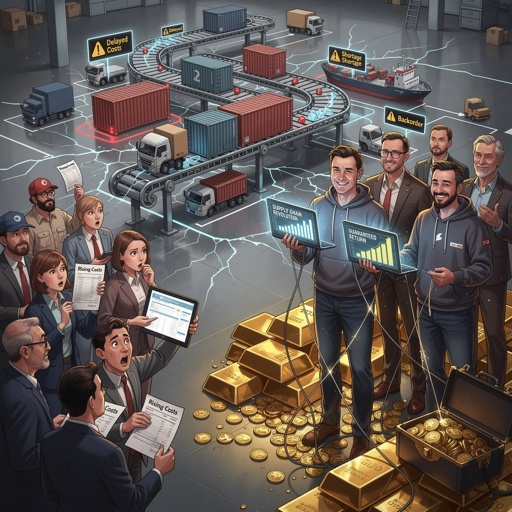
I think so. Ten years ago, I started writing a book titled Stories of the Misguided Gold Diggers. The book was a collection of stories from two decades of stories of supply chain technology leaders perpetuating the myth of integrated planning. I dusted off the manuscript on Saturday. I think that we have a new chapter.
For clarity, my goal is not to throw mud at the industry — supply chain planning — where I work. I am grateful for my readership and support, but I struggle to perpetuate the current lie of planning technologists of end-to-end supply chain planning.
The Dialogue by Contrarian(s)
Many might call me a contrarian. I am ok with this label. So, if you are buying software or attending the unnamed vendor’s conference in Shanghai, here is my warning.
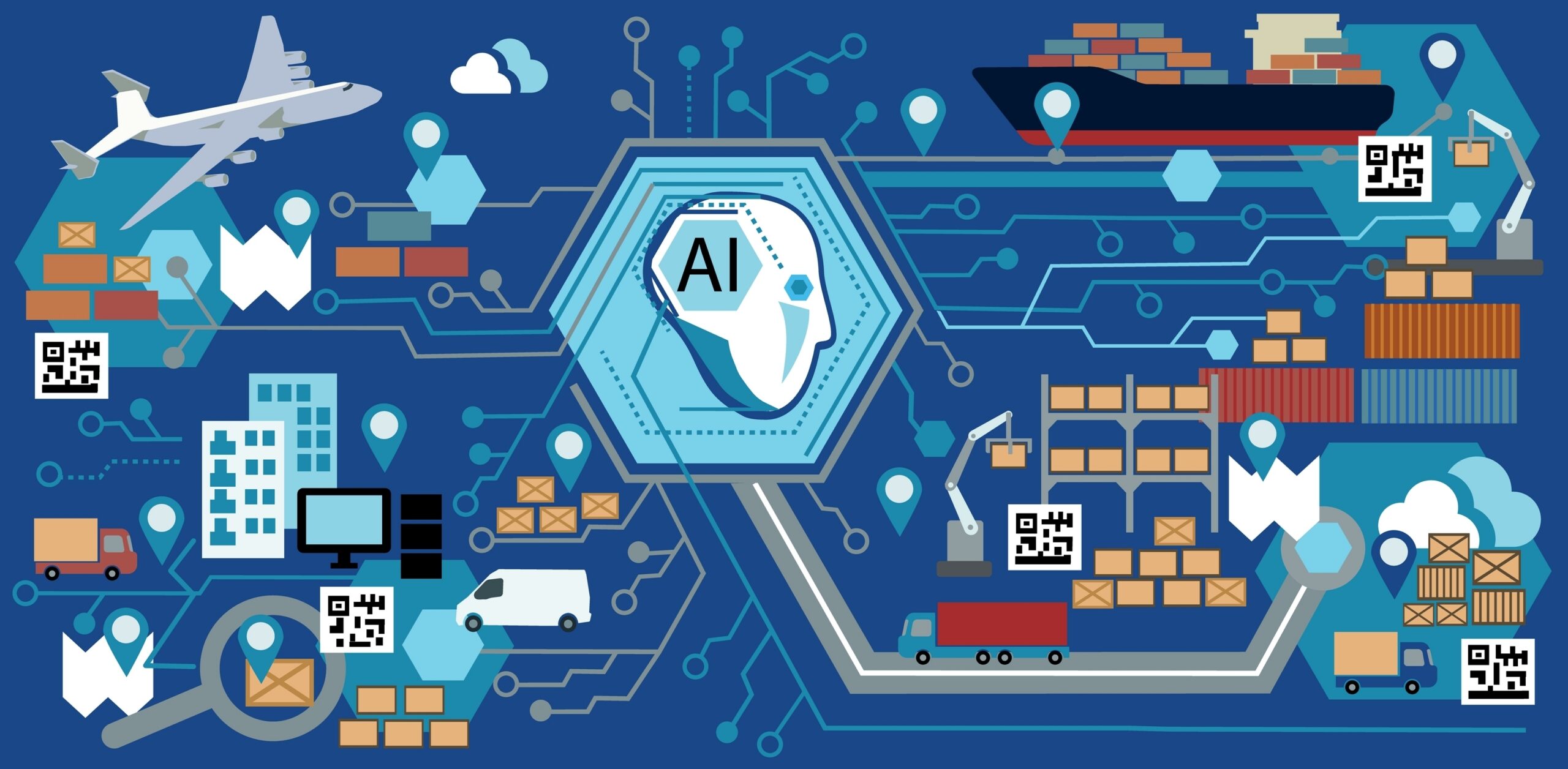
As the industry becomes more enamored with agents and agentics, my internal struggle intensifies. Most of the vendor briefings that I see day-to-day fall in the category of “AI Stupid.” This is a world where technologists are layering cool new technologies on top of old planning taxonomies and marketing the platforms as end-to-end planning orchestration. Yes, indeed, a new buzzword has entered our vocabulary. And we have many conferences where supply chain planning leaders tout the benefit of end-to-end supply chain planning, while their results on inventory and operating margin rank them as supply chain laggards. The voices of laggards with large egos perpetuate most conferences. And the unknowing nod in agreement.
The industry lacks a moral compass. We need to erase stupid.

Maybe it is just me, but I struggle to watch technologists get rich on a lie while supply chain business leaders struggle to make their systems work effectively. Technology can now answer many questions and provide insights on how to solve problems. Many business leaders do not realize that their support of traditional thinking is a barrier to progress.
In my email streams following my post, I also got three emails from leaders I respect. I found each comment useful. I hope you do as well. I share them to help spur a meaningful dialogue amongst those feeling the pain of the broken promise of supply chain technology providers:
After 20 years implementing planning across Asia Pacific, I’d push the diagnosis one step further: the silos survive every integration project because all planning layers aggregate. The moment you aggregate, you destroy the rules that actually run a supply chain: MOQ per supplier, minimum remaining shelf life per customer, lead time variations linked to ship schedule, delivery held until fill rate, SKU-location replenishment policies, etc. Those rules only exist at the transaction level. So the end-to-end promise is structurally broken before the first connector is built. No common data model can restore what aggregation already deleted. The conclusion we were pushed into: keep the entire decision chain at order level, even for S&OP/IBP. In practice, that means simulating what the ERP will do in the future, forecasted order by forecasted order, with the chain’s logic intact all the way through. That’s the engineering problem we’ve been working on for years with SIMCEL. It’s hard, and we deliberately don’t call it end-to-end management. It’s conceptually one decision layer with no data break.
Julien Brun, CEO & Founder, SIMCEL | Augmented Decisions
The reason end-to-end planning does not exist is not that vendors are lazy or that the math is missing. It is structural. The connector is a transaction, not a decision. Order-to-cash and procure-to-pay are the load-bearing integrations in every supply chain stack on earth. They carry quantities, dates, and identifiers. What they cannot carry is why: the reasoning that produced the quantity, the bounds the decider was working inside, what they expected to happen, and how confident they were. Most IT stacks are built for transactions, not streams, so the insight dies at the handoff unless someone manually carries it forward.
That manual handoff is the connector the stack never built.”
The vocabulary is different at every hop. Lora’s line is exact: “Each system has a different definition of location, item, events, order, and purchase orders.” A site in the TMS is a dock. A site in the planning system is a stocking point. A site in the ERP is a plant with a storage location under it. You cannot compose decisions across systems that disagree about what a site is, and
no amount of middleware turns three definitions into one.
Trevor Miles, Founder of Azirella
“End-to-end supply chain management” has been promised for decades, but most architectures still connect planning, execution, and record systems through transactional workarounds rather than through a common decision model. The missing layer is not another planning module or another AI agent. It is a governed way to answer, across functions and trading partners:
What decisions are being made?
Who has authority to make them?
What evidence is required?
What are the next valid actions?
What happened compared with what was expected?Until those questions are encoded into a shared operating model, AI will mostly accelerate disconnected decisions inside old architectures.A unified data model matters, but on its own it is not enough. The real breakthrough is a common rules-based ontology that connects context, authority, workflow, evidence and feedback. That is where I believe the next generation of trade architecture has to move: from disconnected systems of insight and execution to governed trade flow.
Pat Byrne, Founder and Chairman of IndEco Systems Pty. Limited
Thoughts on Getting Started
So, what do you do when you are stuck in an organization that firmly believes in the direction of the misguided gold diggers? Dig firmly into what drives business results. Redefine your relationship with data and build processes that matter. Measure the benefits and encourage the team to think differently. Here are some examples:
Rethink the Role of EDI. On September 16th, I am speaking at the 50th anniversary of the Book Industry Study Group. The topic of the speech is “Building the Supply Chain that the Book Industry Deserves.” (I love the title.) One of the study group’s recommendations is to discontinue the use of Electronic Data Interchange (EDI). They will be surprised when I share that the EDI data stream is an underused but valuable asset. Yes, I know the issues. EDI is expensive, there is data latency, and not everyone can use EDI, but this logic does not reflect the changes in the market. Today, EDI latency is dramatically less, and the costs per document have declined. The time to send messages used to be a nightly batch, but now it is hours and minutes, and the EDI messaging systems have the only effective use of standards for interchange in value networks that we have been able to build. After twenty years of trying to support the concepts of Supply Chain Operating Networks and Value Added Networks, I am rethinking my position. The industry has largely failed to build effective value networks. So, in this variable world, why don’t we embrace the predictive analytics and proactive alerting evolving from EDI networks as an outside-in signal for lead times, out-of-stocks, and alerts? The problem is that the EDI groups sit largely in the belly of the IT organization. The technology is not sexy, and the group often feels underappreciated and misunderstood. One of my recommendations for the BISG group facing shortages of paper and substrates is to rethink their relationship with EDI.
Define Demand Management As a FLOW, Not a Series of Time-Phased Data Outputs. One of the most important principles of outside-in planning is to use market signals (utilize advancements in technologies to use multiple inputs) to sense and define demand streams, and then apply the right models and optimizers based on characteristics and flow. The concept is that markets continually shift, and that the supply chain has many flows, not just one. The second step is to measure the Forecast Value Added by demand stream and help the organization understand the value of a demand process that drives intrinsic value. Push the numbers through a network planning optimizer to help the organization understand the value of the shift in demand thinking. Map these flows into tactical supply planning for S&OP and then apply the appropriate supply techniques. For example, if the item is not forecastable by any demand technique, should it be a make-to-stock item? If a contract manufacturer’s lead time is outside the requirements of a responsive supply chain (one that needs to respond quickly to market shifts), should the item be manufactured within the organization despite the negative hit on OEE? What is the impact of unchecked complexity and long-tail product portfolios on forecastability? Measure the impact. Are you shifting or shaping demand? If you are shifting demand from one period to another without a positive benefit to baseline lift, what is the impact on margin? Align with the data science team to educate the team to think differently.
Redefine Transportation Planning Outside-in. Use data from transportation visibility technologies to measure and predict lead times, and use this data to inform a planning master data layer that updates lead time predictions with each batch run of supply chain planning. Lead times matter. There are over fifteen systems within the organization that use lead time as a parameter. Don’t believe me, count them– Safety Stock and Material Buffers, Distribution Requirements Planning (DRP), Enterprise Requirements Planning (ERP), Vendor Managed Inventory (VMI), Manufacturing Planning (MPS), Transportation Planning (TMS), Just-in-Time Management (JIT), Available to Promise (ATP), Material Requirements Planning (MRP), Routing and Scheduling, and Procurement (SRM). Each runs with a different parameter that is not in sync with the other systems, but more importantly, not aligned with market reality. Most are set-and-forget values that are not in concert with market reality. Lead times are longer, but more importantly, more variable. Most systems are running on outdated data. Measure the impact and help the organization understand how this variability affects costs and order reliability.
Many projects today, like supply risk management and control towers, are knee-jerk reactions — largely reactive to symptoms — because we are not aligning the data with new technology capabilities to drive better outcomes. Be a change agent. Don’t fall prey to the narrative of the Misguided Gold Diggers.
I welcome your thoughts.