For the past six years, I have spent my labor day weekend preparing for the Supply Chain Insights Global Summit. Next week, I will welcome over 100 participants to the annual event. The event is designed to Imagine Supply Chain 2030.
The format of the conference is different than most. There are no vendor booths or paid speaking engagements. I handpick each of the speakers and work with industry leaders to develop content. For the event, I also invite the Supply Chains to Admire award winners to present their story and give the winners awards. This year, Sleep Number will present their story of driving profitable growth in the face of complexity. The event is live cast and will be archived. The goal is to build a guiding coalition for change.
Over the six years of the analysis, the number of winners is consistent at 4.5%. Less than five percent of companies are outperforming their peer groups while driving improvement. The reason? Traditional supply chain processes are not equal to the challenge.
If you believe we have the best practices, please spend time reviewing the data. The full report is available for review. The analysis is designed to provide Industry benchmarks by peer group and to celebrate the success of 23 companies out of 28 peer groups. As can be seen in the analysis, 80% of the industries studied for the report went backward on key performance measurements like cost and inventory management over the last decade. The reason? There are many. Some would say that there are too many to count, but I believe that it includes complexity, compliance, commodity volatility, increase in demand volatility, globalization, and alignment.
Can Data Scientists Help?
The answer is maybe. However, don’t think that the addition of data scientists to the supply chain team is a panacea.
Let me explain. I am a simple gal. For me, progress starts with people. In preparation for the Global Summit, we completed a survey of employee satisfaction. The major gaps are finding employees with the right skills, training on next-generation processes and the lack of executive understanding of supply chain processes. These themes are not new. The answers are more complex.
Figure 1. Employee Challenges

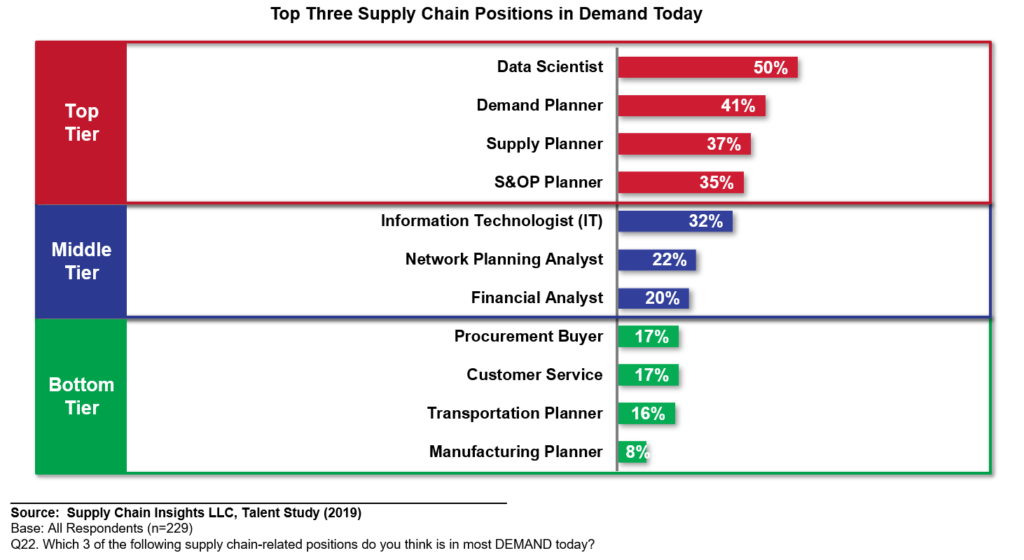
The greatest gap in sourcing talent is in deep analytic skills. These are tough to find. With the supply chain programs embedded in the Department of Marketing within Business Schools, many business leaders worry that the incoming talent lacks depth in analytics skills.
Figure 2. Positions in the Greatest Demand
 The shifts in analytics are exciting, but the organization’s ability to use them is questionable. In many organizations, the inclusion of data scientist into teams is like a dog chasing its tail. The reason? Automation requires clarity. Data scientists think they know the answers, and business leaders are unable to speak their language. As a result, there is an impasse.
Progress Is Slow
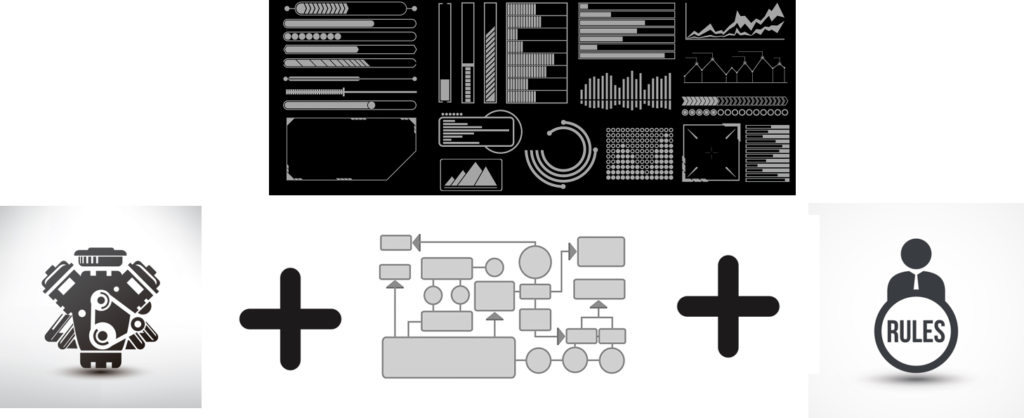
The data scientist focuses on the improvement of engines, but new processes need more than engines. Systemic improvement requires the redesign of workflow, rules, and the user interface along with the engines. Most business leaders lack this attention to detail, and most software providers are too busy selling today’s systems to rethink and provide a step-change in functionality. The technologists face the Innovators’ Dilemma. As a result, the greatest innovation happens in best-of-breed start-ups.
To maximize the value of a data scientist team, the organization needs to think about an organizational layer of translation to adequately communicate the requirements of workflow, rules and the user interface. Without this, I find that the data scientist will improve the engine, but the results are not able to become part of an embedded process due to the lack of holistic thinking.
Figure 3. A Need for Holistic Thinking for User Interface, Engines, Workflow, and Rule Sets
What to Do?
To drive progress, we must challenge our mental models and test our paradigms. I am excited to do this with the audience next week. I look forward to sharing the images the groups will develop on the Future of Supply Chain 2030 with our visual artist next week. I hope that you join us online for the event.