On Tuesday this week I will present the findings from the recent Supply Chain Insights study at the Penn State Forum. As I worked on my presentation, three themes emerged.
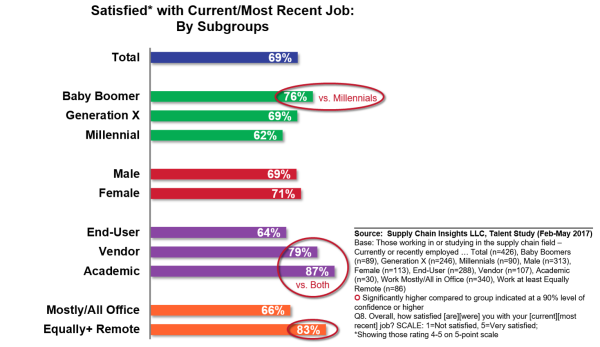
1) Opportunity. The most satisfied respondents on the survey were technologists and academics by profession, Baby-Boomers by age group, and those with the ability to work from home. The least satisfied are those in manufacturing work teams.
A central theme in the study was the perceived lack of opportunity in supply chain management for Generation X and Millennials in manufacturing.
Figure 1. Relative Satisfaction
One of the issues is the lack of thinking and process innovation on next-generation supply chain processes. With the passing of the generational baton, Millennial workers struggle to get access to opportunity to make a difference. Traditional supply chain thinking is a deterrent. What does traditional supply chain thinking look like? It comes in many forms. Respondents report concern on the usability of traditional supply chain systems. They want supply chain systems that mirror their mobile phones and tablets in their personal life. They also want clear career paths with cross-functional and upward mobility. Many in the study feel stuck in insignificant positions with limited career mobility.
Figure 2. Top Supply Chain Challenges

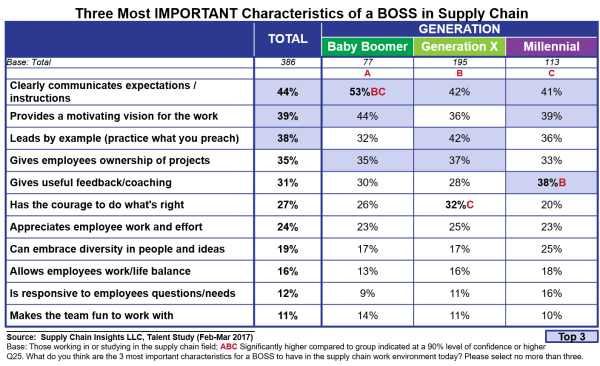
2) Leadership Matters. In the study, desired leadership takes many forms. While clear communication is important to all, Generation X employees want leaders who do the right thing, while coaching is more important to Millennials. In recruiting and hiring there is an overwhelming desire to work for a company that focuses on human resource development. Coaching, communication, internships, training, and clear career paths are important characteristics. While Baby-Boomers were comfortable working in an emerging field with an unclear career path, this is not sufficient for Millennial employees.
Figure 3. Most Important Characteristics of a Boss by Generation
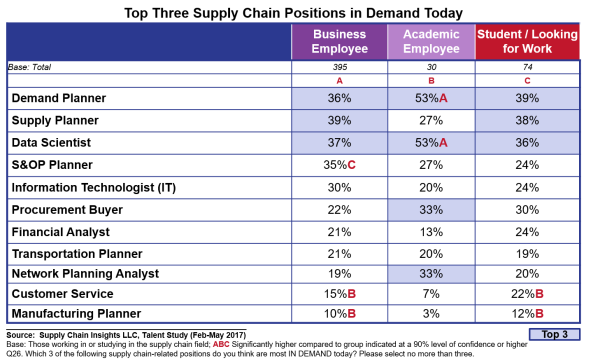
3) Talent Shortages. Today’s manufacturing organizations struggle to find talent at the intersection of analytics and planning. While most academics feel that the greatest talent gaps are in the area of demand planning and data science, the greatest shortage is in the area of supply planning. With more and more outsourced manufacturing, companies are struggling to build a comprehensive understanding of manufacturing and supply for today’s leader. The use of internships and cross-functional projects help, but this gap will continue to grow with the retirement of baby-boomer leaders.
Figure 4. Job Gaps
In summary, if you are trying to attract supply chain talent, focus on three elements:
1) Clear Career Paths, Internships and Development Programs. Realize that the needs and requirements for Millennials are far greater in these areas than Baby-Boomers realize. To maximize job satisfaction, make sure that development activities embrace opportunity and process innovation.
2) Flexible Work Programs. With the issues of work/life balance and community, employees are more satisfied when they are able to work from home and better balance priorities. Create a work environment to enable this type of flexibility.
3) Coaching Programs. Openly discuss and gain clarity of business expectations for clear communication and coaching. These vary by company, but a focus on principle-based leadership in these areas pays big dividends.
These are my thoughts on a Sunday evening. I look forward to hearing from you.


My Answer to Joe. The Future of APS
Traditional Advanced Planning Systems (APS) are unlikely to become true enterprise platforms because organizations remain functionally siloed, metrics are misaligned, and current APS architectures were designed for an environment that has fundamentally changed. Here I share how I think that APS systems can adapt to drive more value.