Lora's Latest Post

Imagine

Right now, at Supply Chain Insights, we are in production mode. The team is busy working on the execution of the Supply Chain Insights Global Summit. In two weeks, we will be hosting our first event at the Phoenician in Scottsdale, AZ. Anyone that has put on a conference, understands the pressure.
As I prepare speakers, facilitate pre-meetings with the panels and answer questions, I am getting excited. I strongly believe that we need to rewire our mental models to win in the Race for Supply Chain 2020. I am more and more convinced that supply chain leaders need to challenge the status quo. At the conference, the discussion will not be about the supply chain world that we know; instead, it will be about the  supply chain that could be. The discussions will focus on themes like:

  • A Shift from Efficient Sickness to Health & Wellness. Today, I interviewed the healthcare panel for the conference. It includes a specialist on 3-D cell tissue regeneration/3-D printing, a thought leader on healthcare integration and the head of the American Nurses association. We had a fascinating discussion about the future of healthcare. It is rapidly evolving to use the Internet of Things to sense health and wellness at the patient’s home, to manufacture organs and tissue and custom drugs locally on an as-needed basis, and to better connect case records and usage data through inter-enterprise systems of record. The change is not an evolution. It is a revolution. It is time to challenge the long, inflexible supply chain that carries three times the level of inventory and is unable to be responsive in a time of need. In the words of Annette Pummel, chair of AHRMM BOD, “We need to aggressively design to drive patient-based outcomes.” Affordable healthcare does not give us time to wait. It cannot be a gradual change. I think that new answers lie in rewiring our mental models.
  • Flexible Manufacturing. Yesterday it was the panel on digital manufacturing, where we discussed the use of 3-D printing and the Internet of Things to improve manufacturing productivity and flexibility and transform manufacturing. Nine out of ten supply chain leaders are stuck. They are unable to power growth, profitability and reduce cycles due to the increase in complexity. Does the redesign of manufacturing to use these new technologies offer promise? I think so.
  • Systems that Sense and Learn. On Monday it was a discussion on Big Data transformation.  The discussion was on the adoption of advanced analytics and new forms of data. Advanced analytics enable process innovation of outside-in processes to use and translate customer data in new ways. I am very excited about learning systems and new forms of visualization and analytics. Will supply chains in the next five years sense and learn while we sleep? I believe so. 
  • Supply Chains that Are Saving the Planet. Corporate social responsibility programs are now six years old. For many companies that is lip service, but for many they are quickly fusing CSR into the brand promise, becoming the essence of the company. I love what Unilever and Starbucks are doing on the redesign of the supply chain to do no harm. As an environmentalist, I believe that supply chain leaders can make a difference. I am excited about the case studies and the evolution of corporate social responsibility processes. Can they make a difference? I say, ABSOLUTELY!

 
If you cannot make it, please watch the live broadcast. We will archive it for a period of six months to enable you and your teams to think about the work that lies in front of us. It is exciting. One thing is for sure, this will not be a YADA, YADA conference.
Search the Archives
Search
Share this Post
Email
Twitter
LinkedIn
Facebook
Pinterest
WhatsApp
Featured Image
Recent Posts

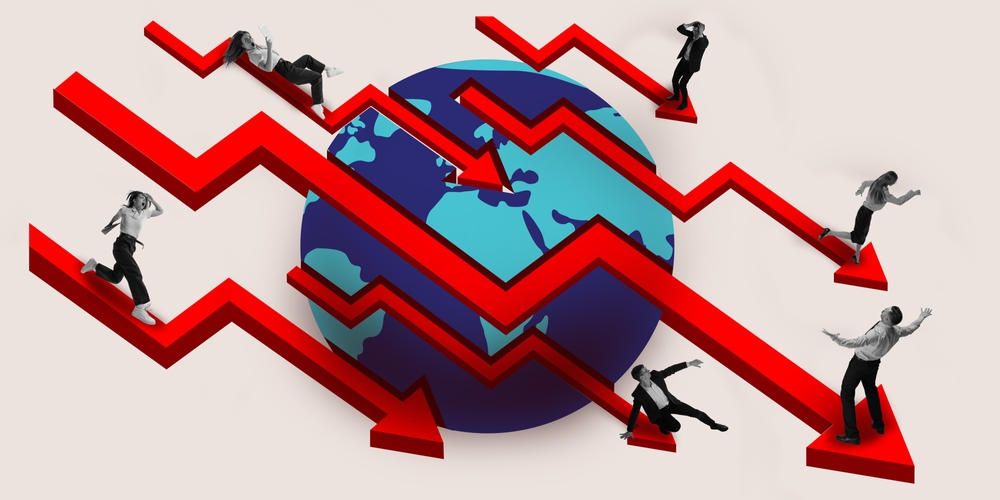
Navigating Supply Chain Economic Downturns

In 2007, the average company took six months to sense market shifts and adapt its supply chain. My estimate, based on work with clients, is that if a downturn happened today, the average company would take 20-30% more time to adjust than in 2007. Here I give insights on preparedness.

Read More »

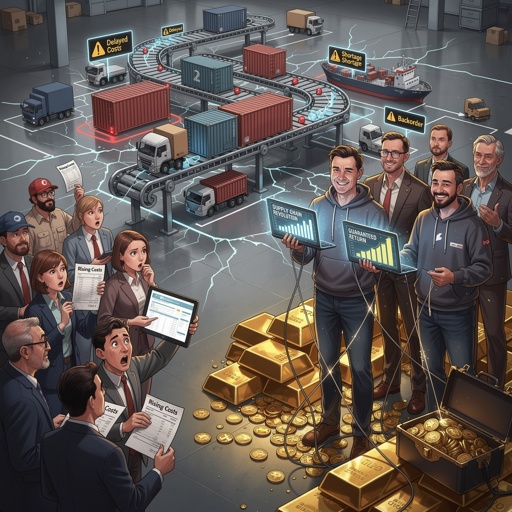
Warning: Sidestep the Narrative of the Misguided Goldiggers

Ten years ago, I started writing a book titled Stories of the Misguided Gold Diggers. The book was a collection of stories from two decades of stories of technology leaders perpetuating the myth of integrated end-to-end supply chain planning.

I dusted off the manuscript on Saturday. I think that we have a new chapter. Companies focused on putting Artificial Intelligence (AI) on top of existing architectures are putting AI Stupid on steroids.

Read More »

The Myth of End-to-End Planning

Supply chain planning, supply management, supply chain execution, network design, and transportation/logistics management operate in silos. Not much has changed over four decades. The connections flow back through transactional systems: order-to-cash and procure-to-pay. There is a myth that companies can buy an end-to-end supply chain management solution. This is largely a myth. Here we explain.

Read More »

Lead Time: A Broken Gossamer

If you are struggling with supply chain planning, dancing in the light of shiny objects, and scratching your head, please read on. My goal is to help you.

Please do not AI Stupid. What do I mean? AI Stupid is putting agents and agentics on top of existing architectures believing that making them faster and hands free add value. To me, this is fools play.

I love AI. I am excited about new technologies. To this end, I want to shine a light on how new technologies can help address the black holes and inconsistencies in today’s supply chain, which largely stem from the limitations of the first generation of supply chain planning and execution technologies. In this blog, I give you three places to start.

Read More »

Do You Need a Supply Chain Coach?

Supply chain is where the rubber hits the road. For a public company, over 40% of market capitalization is tied to the trade-offs between growth, operating margin, inventory management, and Return on Capital Employed.

The road for supply chain improvement is fraught with issues. Here we share some and offer some advice.

Read More »

Is your Supply Chain AI Ready?

A simple quiz to assess an organization’s AI readiness.

The pace of change is fast and furious. Every day, technology advances faster than we can digest. A great challenge to have.

Determining whether a supply chain is “AI-ready” is less about technology and more about the gray matter between the ears of supply chain leaders. Leadership, alignment, and clarity of goals matter.

Too few companies are clear on the definition of supply chain excellence. Measuring and rewarding functional metrics reduces the firm’s value. Putting agentics on top of today’s processes can make bad practices run faster, reducing value.

The toughest job for the supply chain leader is challenging existing supply chain paradigms that were defined by the limitations of decades of supply chain technologies. As the curtain lifts on the potential of new forms of technology, process redefinition is our opportunity, but only if we are clear on what drives value. (Here, I link to the Supply Chains to Admire reports to help you define value. The next report will be published on June 23rd, along with my Dynamic Benchmarking Product, to help you define value in the face of your AI readiness. More information about the launch is at the bottom of this blog.)

Read More »