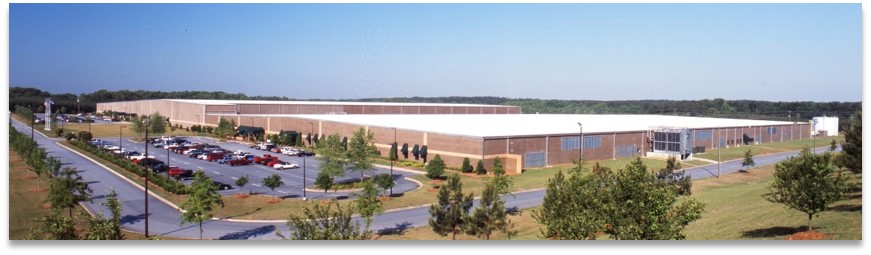
Recently, I spoke on the future of supply chain management at the University of Tennessee Supply Chain Forum. At the end of the presentation, Ed Hamlin of Logility stopped me and engaged me in a conversation on a recent Logility implementation at Glen Raven. He was proud of the implementation and asked if I had heard of Glen Raven. As he talked, I smiled. I find Glen Raven to be a very interesting company. It is a privately-held textile company that successfully navigated the global sourcing/labor arbitrage mania of the last decade and managed to maintain a significant presence in the United States.
As a side note, my niece works as a Database Administrator at Glen Raven; and as a result, the company has been a frequent discussion at my family’s Thanksgiving dinner table. As my brother tries to figure out what his crazy sister does for a living, my niece uses her experiences at Glen Raven to translate the need for the business model. (My oldest brother is unsure why anyone would buy services from his little sister. My niece tries to defend me.)
I like case studies and readers enjoy them on the blog, so following the conference, I reached out to Ajay Bhardwaj, Director of Planning at Glen Raven Custom Fabrics, to understand his story. I appreciate his willingness to share it.
The Story
Leib Oehmig, the CEO of Glen Raven, Inc. had a goal. He wanted the company’s business to grow efficiently. For him, this meant growing top-line revenue with less supply chain inventory. To achieve the objective, he asked Ajay Bhardwaj, Director of Planning at Glen Raven Custom Fabrics, to help.
 Ajay, shown here, has a strong background of 25 years in supply chain planning. He knew that to accomplish Leib’s goal, he needed a planning system to integrate the supply chain and recognize constraints.
About Glen Raven
Glen Raven is a privately-held textile company founded in 1880. The Company has three business units: Custom Fabrics, Technical Fabrics, and Trivantage. With a global presence of operations in the US, France, China, India, and Brazil, the company coordinates global supply for regional markets. Ajay works in the Custom Fabrics division that manufactures and markets premium performance textiles, including Sunbrella and Dickson branded products. Since 1961 the Sunbrella brand has been the leading fabric combining UV durability, cleanability, and beautiful design. The fabrics are used for applications in the Awning, Automotive Convertible Tops, Marine, Indoor and Outdoor furniture, and Contract and Healthcare furniture industries. Glen Raven is the market leader for the supply of convertible tops.
In an environment where customers demand more variety with shorter lead times, Ajay knew that an integrated supply chain planning solution could help the business to deliver against customer expectations.
The Project
To meet the business goals, Ajay’s team began with a thorough process review of the existing planning procedures and systems, followed by the implementation of an advanced planning system that integrated all the major planning workflows of a manufacturing company.

Demand planning was implemented in six months, while tactical supply and inventory planning took twelve months. (Note, when done right, we often see that supply planning takes 1.5-2X longer than demand planning.) The implementation in the United States was for three yarn manufacturing facilities, a weaving factory, and a distribution center. In China, the rollout was for a weaving factory and outsourced yarn manufacturing. The implementation included two production instances and two development instances. The implementation included 11 integration points and 43 production specifications. Over 12 million unique data elements are transferred through the interfaces each night into the data modeler.
The team successfully completed constraint-based planning for raw materials, weaving, and finishing, including outsourced production. (Less than 25% of companies interviewed successfully complete constraint-based supply planning.)
Net result? The team met their business goals. The business grew with the same levels of inventory, and improved service levels. Today, service levels (case fill rates) are 2% above target. Here we share some insights from Ajay:
Q. What advice would you have for others implementing supply chain planning?
Ajay: I think that it’s essential to stay focused. I recommend that other manufacturers considering this approach focus on four areas.
– Start with a clear vision of the overall objectives/goals. The vision of the CEO was helpful to help us accomplish the goals. We had a clear rallying cry and executive support. We provided weekly progress updates to the executive team and had their full support during the project.
– Involve key users in the project. To get a widespread sense of ownership, all the key users of the system had specific roles on the project team and helped to configure the software. We worked closely with the best-of-breed solution provider, Logility, on the implementation, but we kept control of project management. A strategic aim of this project was to replace a homegrown forecasting application. The manager who developed this solution was a key player in configuring the new demand management solution.
– Have a relentless focus on execution (project management). Experience has taught me to monitor tasks very closely. If a task is not 100% complete, the questions to ask are “when will it be complete, and what is the overall impact?” I do not go by x% complete! We stayed focused on the goal; and as a result, we managed the project timeline closely.
– Avoid the temptation to model everything. The key to success is to keep the modeling simple (understandable) with a focus on what matters in the business. I think one of the success factors of the project was making sure that the critical elements of the business were modeled, but that we did not boil the ocean and make it overly complex. I wanted to stay true to the project goals.
Q. What is next?
Ajay: We have built enough support to continue the project rollout globally. It is important to track project results to gain the support of others.
Q. What do you wish you had done differently? And, why?
Ajay. With the benefit of 20/20 hindsight, we could have worked with our system integrator to transfer knowledge to our team even faster through training and what-if scenario modeling. It is important to not short-change this step.
__________________
Ajay, thanks for sharing your case study with the readers. As a result, I now have an even better story to share at my family’s Thanksgiving table. But more importantly, the readers of the blog have some valuable insights to use in their scoping of Advanced Planning Systems. For me, one of the most important pieces of wisdom from Ajay is “not to model everything.” It reminds me of a story about a client I have worked with for over a decade. Because they were not clear on the goal, they have implemented four different technologies badly. While they might blame the technology company or the system integrator, the issue is that they never built their system with the goal in mind. I like this case study because there was a clear goal, definitive governance on the project plan, and the system was built with the goal in mind. Thanks, Ajay! Great advice for others.