Nine out of ten companies are stuck. They are not stuck in a good way like a label to a case. And, it is not in a minor way, like food on a plate that cannot be easily removed for the dishwasher. Instead, they are stuck in a way that cannot easily be undone. It is like gum on your shoe or a car in a snow storm.
Henry Ford once said, “If I had asked my customers what they wanted, they would have said, a faster horse.” There is a reason why manless vehicles are being innovated by Google, and not Ford. It is the same reason that Amazon and Tesla are growing rapidly. It is about new and differentiated business models. The shift requires holistic thinking.
I was talking to a client yesterday about the evolution of technologies for the extended supply chain. She stated, “We are having the same conversation over and over again. I left supply chain and went to Europe for four years, and thought it would change. But, guess what? It is the same conversation. We are not making progress.” My sentiment is the same.
Today, I want you to imagine what our world could look like if we had an effective extended supply chain.
What Would This Look like?
The ends of the supply chain are weak. Supply chain leaders are in the middle. Yet, we are asking the transactional buyers and sellers of goods and services to plot the path forward for value chains. I think that this is a mistake. The vision is too limited.
The new vision will not come from sales talking to procurement buyers. Please let me repeat, “The ends of the supply chain are weak.” They are too functional in orientation. Buyers and sellers are focused on transactional enablement. Customer Relationship Management (CRM) and Supplier Relationship Management (SRM) systems were not designed to connect the end-to-end value chain.
Instead, it needs to be driven by someone who can orchestrate and design end-to-end, from the customer back, based on channel consumption. Only 1% of companies have someone in this role. Only 1/3 of companies have a supply chain center of excellence and 50% of these companies feel that it is successful. The reason is that supply chain has now been defined as another function. As such, it becomes part of the problem, not part of the solution.
Be Part of the Solution:
Take five actions to become part of the solution, not the problem:
1) Analyze and design supply chain processes outside-in. Focus on market-driven, not sales-driven, processes to enable your moments of truth in the channel. Design the processes to use channel data with a focus on decreasing demand latency. I posted a slide deck on slideshare yesterday that outlines the current state of connectivity. I find it sad that after four decades of working with EDI we are where only 1/3 of orders can move hands-free in our systems.
2) Change the reward systems to measure and manage the supply chain as a complex system. Align incentives to focus jointly, and across the organization, on revenue, margin, inventory turns, and customer service improvement.
3) Build strong horizontal processes. Move supply chain from a functional orientation to an enabler of horizontal processes. The key horizontal processes are revenue management, sales and operations planning, supplier development, and corporate social responsibility.
4) Actively design the network. I find it ironic that companies would never implement a manufacturing site without intensive design. However, most companies inherit the supply chain and do not question the design. A challenge for most companies is understanding the design levers.
5) Redesign the ends of the supply chain. Actively work on improving connectivity and recognize the need to harmonize and synchronize partner data. The term integration is too simplistic. Learn how to use multiple data streams in planning.
Do you think that I missed anything in my analysis? Please let me know.
Happy holidays to you and your team. We hope that you like the gift that we will send you next week.
Navigating Supply Chain Economic Downturns
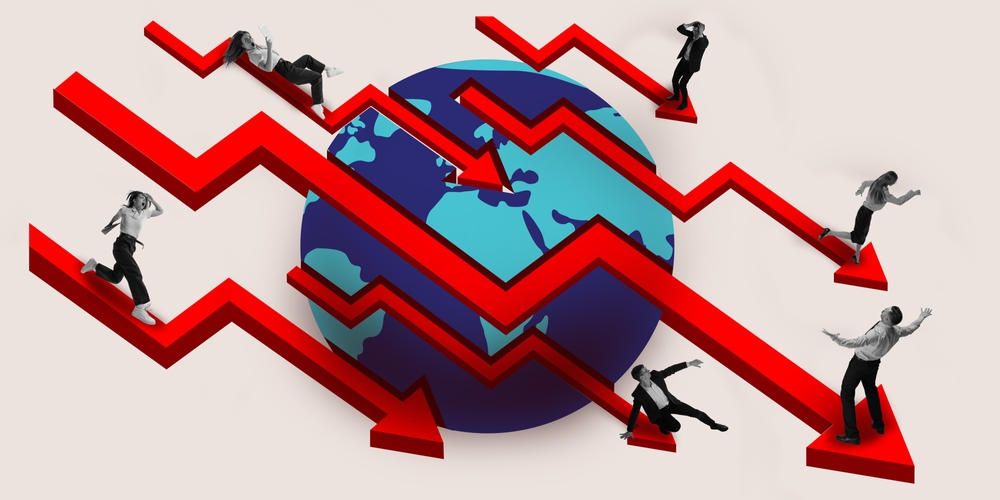
In 2007, the average company took six months to sense market shifts and adapt its supply chain. My estimate, based on work with clients, is that if a downturn happened today, the average company would take 20-30% more time to adjust than in 2007. Here I give insights on preparedness.